The Drive That Changes Everything
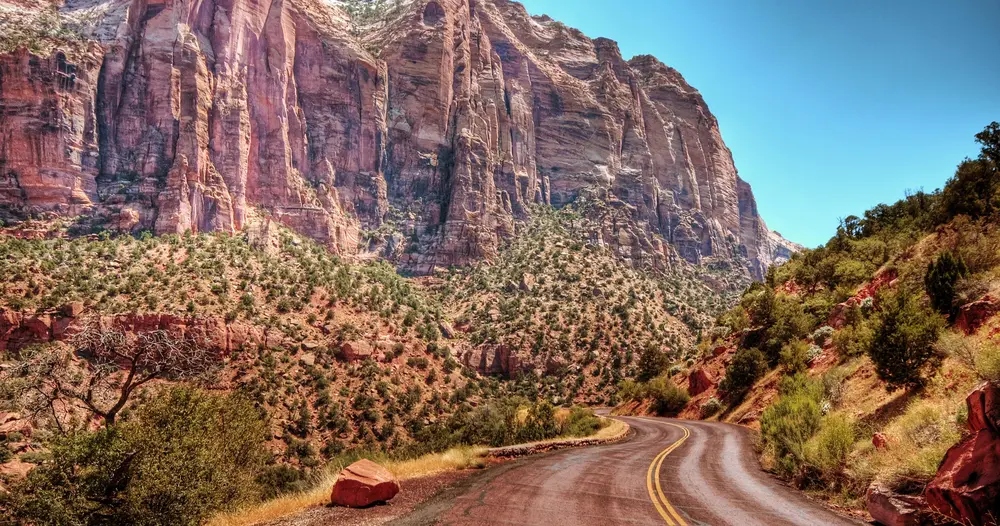
There is a moment, usually somewhere around the second mile of Zion Canyon Scenic Drive, when most visitors go quiet. The canyon walls, which have been impressive since the entrance, suddenly close in and rise to a height that reframes human scale entirely. You are no longer looking at a landscape. You are inside one.
The Scenic Drive follows the North Fork of the Virgin River north from Canyon Junction for approximately 15 miles, terminating at the Temple of Sinawava, the end of the road and the beginning of Zion's famous Narrows slot canyon. Every mile reveals something new: a new rock formation, a new perspective on the canyon, a new encounter with the wildlife that lives here.
The Canyon's Geology
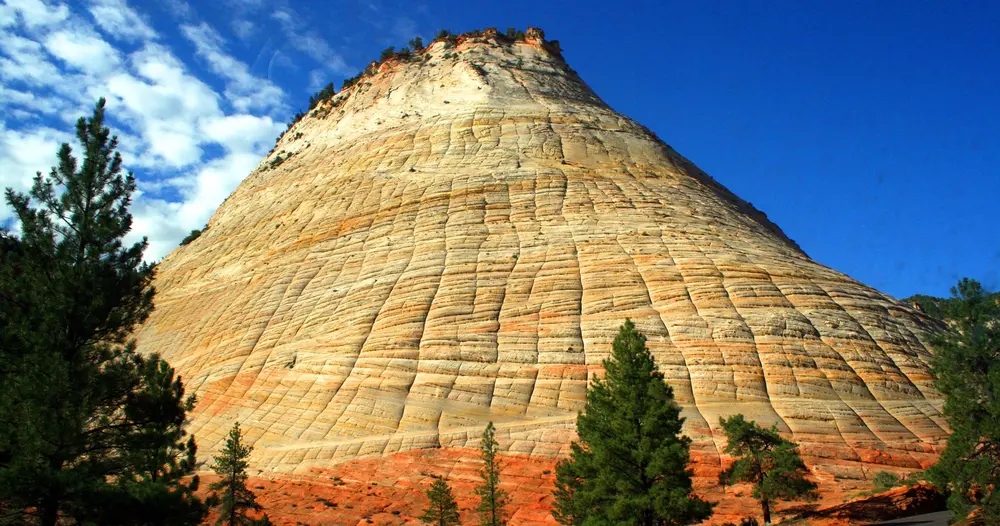
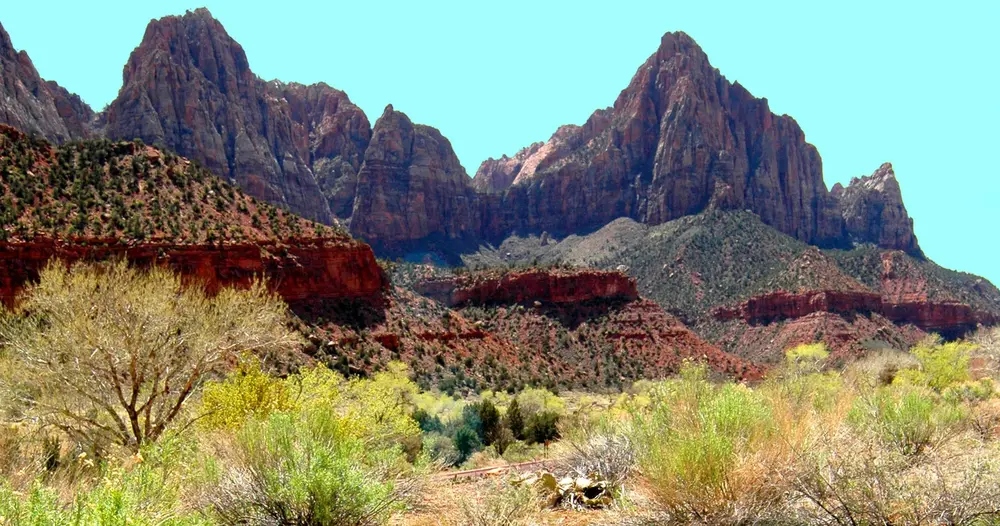
The walls rising above the road are among the most layered geological records anywhere on Earth. The lowest visible rocks are the Temple Cap and Kayenta Formations, dark reddish-brown ledgy rocks formed from ancient river sediments. Above them, the canyon transitions into the towering cream-colored Navajo Sandstone: massive, smooth, sweeping cliffs that glow orange, pink, and white depending on the light.
The Virgin River is the architect of all of it. Over millions of years this relatively small river cut downward through the rising plateau (a process called incised meander) carving a canyon that is in some places half a mile deep while remaining relatively narrow. The river is still cutting. Zion Canyon is not a finished work.
Pro tip: Look for the Great White Throne, a massive monolith of Navajo Sandstone visible from multiple points along the drive. It rises 2,456 feet from the canyon floor, making it one of the tallest exposed cliff faces in North America.
Key Stops Along the Drive
- Court of the Patriarchs, Three enormous sandstone peaks named Abraham, Isaac, and Jacob. A short walk to the viewpoint reveals all three in a single frame
- Zion Lodge, The only in-park lodging, set within a meadow flanked by canyon walls. Excellent views of the Great White Throne and Angels Landing
- The Grotto, A shaded picnic area by the river and the trailhead for Angels Landing. A good spot to step out and feel the scale of the canyon
- Weeping Rock, A natural alcove where water seeps through the Navajo Sandstone and drips from a hanging garden of ferns and wildflowers
- Big Bend, One of the best photography spots on the drive, where the canyon bends to reveal multiple formations simultaneously
- Temple of Sinawava, The road's end, where the canyon walls narrow dramatically and the Virgin River disappears into the Narrows
Wildlife Along the Road
Zion Canyon is one of the most biologically diverse environments in the American Southwest. On any given drive, visitors commonly spot mule deer grazing in canyon meadows, California condors soaring on thermals above the walls, wild turkeys near Zion Lodge, and peregrine falcons nesting on cliff ledges in spring and summer. Your guide will know where to look at every stop.
The Shuttle System and Why It Matters
From spring through fall, private vehicles are not permitted beyond Canyon Junction, visitors travel by free park shuttle. This system, introduced in 2000, eliminated gridlock and restored the canyon's silence. On a guided tour, your vehicle enters the canyon directly year-round, giving you flexibility and stops tailored to your group rather than a fixed shuttle schedule.