What Is a Hoodoo?
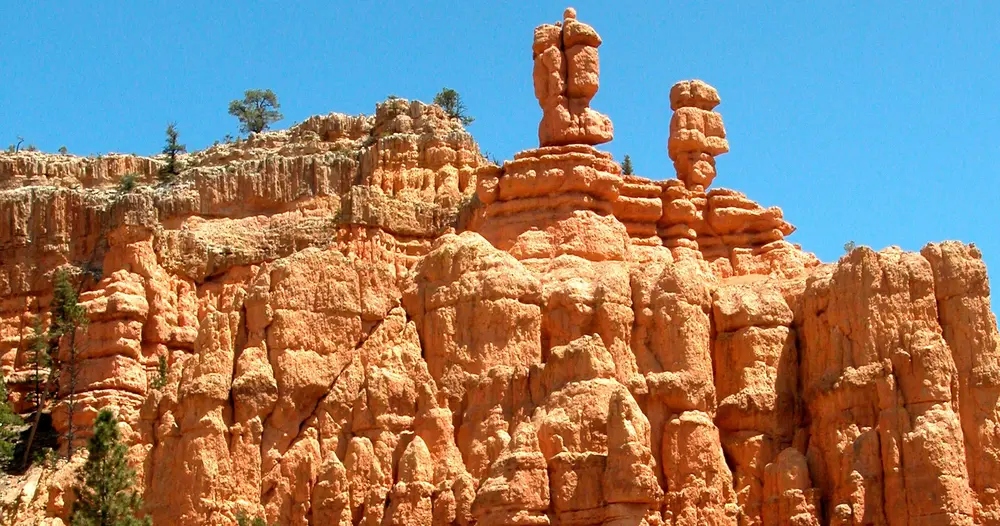
A hoodoo is a tall, thin spire of rock left standing after the surrounding softer material has been carved away by erosion. Think of it as a column that erosion tried to destroy, but the rock at the top was just hard enough to protect the pillar beneath it. The result is a bizarre natural tower with a broader cap and a narrowed neck, repeated thousands of times across the floor of Bryce Canyon's famous amphitheaters.
Hoodoos exist in many parts of the world, but Bryce Canyon has more of them than anywhere else on Earth, and nowhere are they more concentrated, more colorful, or more dramatically arranged.
How Hoodoos Form
Bryce Canyon's hoodoos are carved from the Claron Formation, a deposit of ancient lake sediments laid down roughly 50–60 million years ago and later lifted thousands of feet by the forces that built the Colorado Plateau. Two forces do the heavy sculpting work:
- Frost wedging: At Bryce's elevation (8,000–9,000+ feet), the temperature crosses the freezing point more than 200 times per year. Water seeps into rock cracks, freezes, expands, and wedges the rock apart, a relentless chisel working at molecular scale
- Water erosion: Rainfall and snowmelt dissolve the limestone's calcium carbonate cement, slowly washing away the material grain by grain and carving channels between harder rock columns
The orange and red colors come from iron oxide, the same compound responsible for rust. The white and cream layers are limestone and dolomite with less iron content. Each color band is a different chapter of geologic time.
Sunrise fact: Hoodoos cast their most dramatic shadows and glow their deepest orange-red at sunrise and late afternoon. The Bryce Amphitheater faces east, making early morning the single best time for photography.
Best Viewpoints in the Amphitheater
- Bryce Point, the highest rim viewpoint at 8,296 feet, with panoramic views south along the canyon. The sheer scale of the hoodoo field is most apparent here
- Inspiration Point, the best overview of the Silent City, a dense cluster of hoodoos packed so tightly they look like a medieval stone metropolis
- Sunset Point, the classic shot, looking directly at the most photogenic section of the amphitheater. Thor's Hammer, Bryce Canyon's most famous hoodoo, is visible from here
- Sunrise Point, the easternmost overlook, positioned perfectly to catch the first warm light of day illuminating thousands of spires simultaneously
Thor's Hammer, The Icon
Of the thousands of hoodoos in Bryce Canyon, one has achieved singular fame: Thor's Hammer. This dramatic spire stands near Sunset Point with a distinctive square cap balanced atop a narrow stem, a configuration that looks structurally impossible but has stood through countless freeze-thaw cycles. It's one of the most photographed geological features in the American West.
A Landscape That Changes Every Visit
Bryce Canyon's hoodoos are actively eroding (not on a human timescale, but measurably. The canyon rim retreats roughly one foot every 50–65 years. New hoodoos form as existing ones crumble. The canyon you see today is different from what future generations will witness. That ephemerality gives the place a particular weight) you're catching this landscape mid-process, at a single frame in a very long film.